Does Your Coffee Break Count as Paid Work Time? Here’s What the Law Says
The quick walk to the pantry for a steaming cup of coffee has long been treated as a guilty pause in the workday for many employees. It is a brief escape from ringing phones, glowing computer screens, and mounting deadlines.
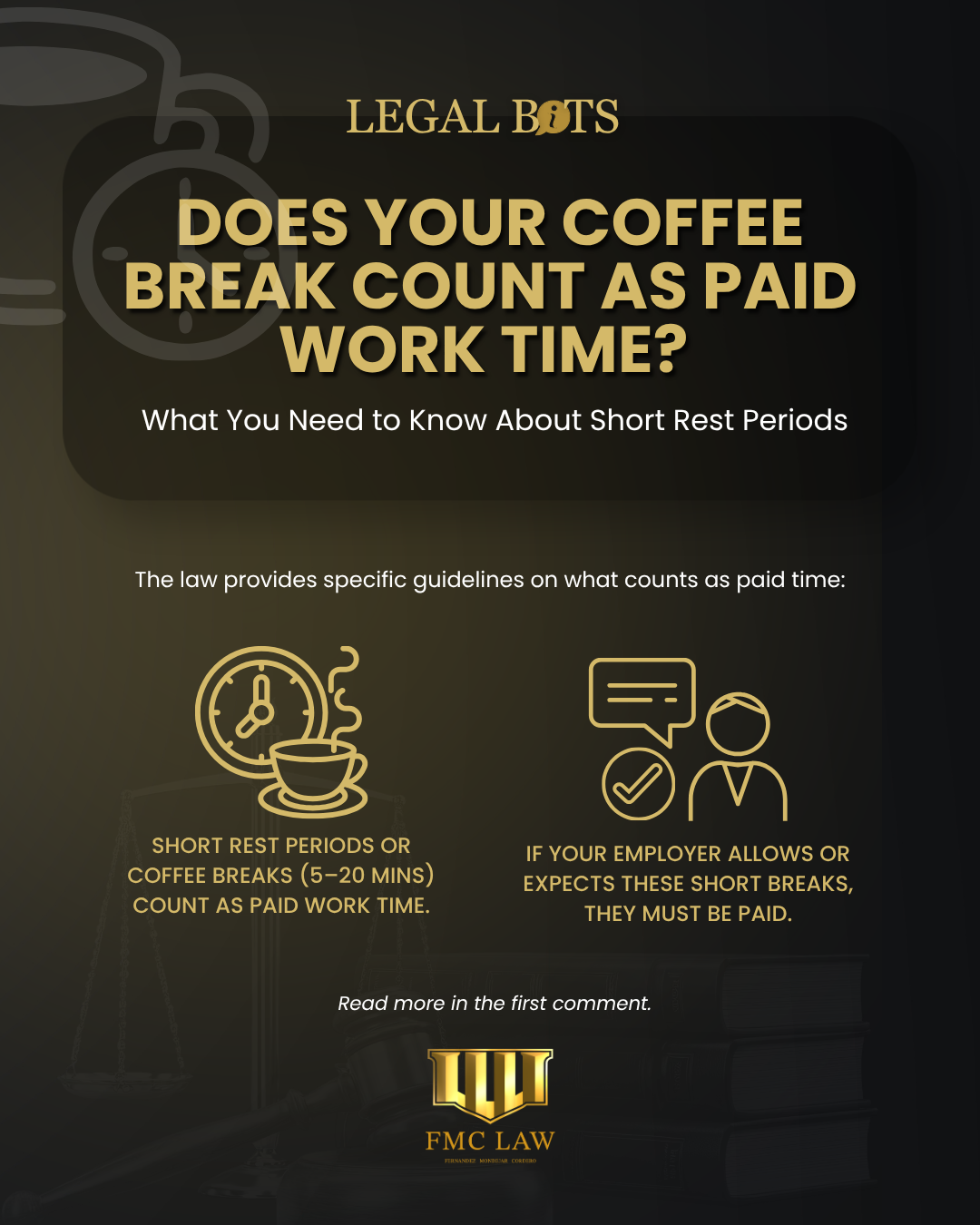
But under Philippine labor law, that short break is not merely tolerated. It is recognized and compensable.
Under the Omnibus Rules Implementing the Labor Code, coffee breaks or rest periods running from five to 20 minutes are considered compensable working time. The rule states: "Rest periods or coffee breaks running from five (5) to twenty (20) minutes shall be considered as compensable working time." - Section 7, Rule I, Book III, Omnibus Rules Implementing the Labor Code In simpler terms, if your employer allows or expects you to take a short break of 20 minutes or less, that time must be paid. It is not a deduction from your eight-hour workday — it is part of it.
Not Just a Perk
In many modern workplaces, from corporate offices and shopping malls to factories and business process outsourcing (BPO) firms, coffee breaks have become woven into the rhythm of daily work.
Some employees use a few minutes to stretch, hydrate, or briefly disconnect from mentally exhausting tasks. Others see it as an opportunity to socialize, regain focus, or simply breathe amid fast-paced shifts.
Labor standards, however, view these short pauses differently from longer meal breaks. The Supreme Court of the Philippines has recognized that short rest periods are part of the normal flow of labor and may even help improve productivity and efficiency inside the workplace. The Court in Philippine Airlines v. NLRC (G.R. No. 132805, February 2, 1999) further clarified that the eight-hour work period does not include the meal break — meaning the meal hour is separate and generally unpaid. But coffee breaks under 20 minutes? Those count.
Meal Breaks Are Different
The law separately provides for meal periods. Under Article 85 of the Labor Code, every employer must give employees at least one hour of time-off for regular meals. Unlike short coffee breaks, meal periods are typically unpaid because employees are considered free from duty during that time.
However, there are specific exceptions where the meal period may be shortened to not less than 20 minutes, provided that the shorter meal break is treated as compensable working time. These are found in the same Section 7 of the Omnibus Rules:
Where the work is non-manual in nature or does not involve strenuous physical exertion;
Where the establishment regularly operates at least 16 hours a day;
In cases of actual or impending emergencies, or urgent work on machinery or equipment to avoid serious loss; and
Where the work is necessary to prevent serious loss of perishable goods.
This reflects the balancing act between operational demands and workers' welfare, especially in industries that require continuous operations.
What About a 30-Minute "Coffee Break"
Here's where it gets practical. If an employer gives a 30-minute paid lunch break where the employee is "on call" and may be asked to work if needed, that period is compensable. The Supreme Court in Sime Darby Pilipinas, Inc. v. NLRC (G.R. No. 1192052, April 15, 1998) recognized that a 30-minute lunch break where employees could be called upon to work was essentially working time.
But if the employer shifts to a full one-hour uninterrupted meal break, the employee is genuinely free from duty, and that hour is no longer compensable. The Court held that such a change does not violate the Labor Code as it simply aligns with the standard rule that meal breaks of one hour are unpaid.
Why This Matters
Labor law practitioners note that many Filipino workers remain unaware of small but important workplace protections, particularly involving wages and compensable work hours.
In some workplaces, employees still experience practices where brief breaks are informally discouraged, monitored excessively, or deducted from working time despite existing labor standards. If your employer deducts 15 minutes from your pay because you took a coffee break, that deduction has no legal basis under Philippine labor rules.
Type of Break | Duration | Compensable? |
Coffee break / rest period | 5 to 20 minutes | Yes — paid working time |
Regular meal break | 1 hour (or 20 min in exceptions) | No (unless shortened under exceptions) |
Rest period under 5 min | Any | Yes — incidental to work |
The Bottom Line
If you believe your hours are being tracked incorrectly, your pay is being deducted unlawfully, or your company policies run counter to these mandated labor standards, protect your livelihood by seeking a legal consultation in Iloilo or Manila. Whether you require a specialized Iloilo litigation attorney or an experienced Attorney in Manila to assess a wage and hour dispute, securing professional law services ensures your workplace rights remain intact.
In recognizing coffee breaks as compensable, the law acknowledges a simple reality of human labor: workers are not machines.
And sometimes, productivity begins with a pause.