An Absent Action: SC Decision Reinforces Schools’ Obligation to Safeguard Students
Schools are often considered to be sanctuaries where children can explore the world of ideas, safe from the dangers of the streets. A parent sends their child through the school gates each morning with a prayer, trusting that the institution will act as a second home. Yet, for many Filipino learners, this assumed safety is an illusion. The Programme for International Student Assessment (PISA) 2022 results revealed that the Philippines has one of the highest rates of bullying in the world, with one out of three Filipino students reporting that they experienced bullying. This reality creates an environment where fear replaces curiosity.
The impact of this violence is visible and heartbreaking. In Metro Manila alone, the Department of Education logged 2,500 bullying cases in School Year 2024-2025, a number that likely represents only a fraction of actual incidents due to underreporting. Videos of physical altercations between students circulate online with alarming frequency, showing children subjected to punches, kicks, and humiliation while peers watch or record. These incidents leave deep emotional scars on the victims and their families, who must grapple with the trauma long after the physical wounds heal. The issue extends beyond simple disciplinary problems as it exposes a systemic failure to protect the most vulnerable members of our society within the very institutions entrusted with their care.
A Safety Agreement
A school's responsibility to protect its students is not just a moral duty but a binding legal obligation rooted in contract law.
The Sources of Obligation
In the Philippines, obligations arise from five specific sources listed in Article 1157 of the Civil Code: law, contracts, quasi-contracts, acts or omissions punished by law, and quasi-delicts. Meanwhile, Article 1156 defines an obligation as a juridical necessity to give, to do, or not to do.
When a parent enrolls a child in a school, a contract is established between the two parties. This agreement binds the school to provide education and, implicitly, safety.
Breach of Contractual Duty
The liability of a school for harm befalling a student is grounded in the legal concept of culpa contractual, or negligence in the performance of a contract, as governed by Articles 1170 to 1174 of the Civil Code. As established in jurisprudence, specifically the case of Philippine School of Business Administration v. CA (G.R. No. 84698), every academic institution carries an implicit or "built-in" obligation to provide a conducive atmosphere for learning. This duty extends beyond mere instruction. It necessarily includes ensuring the safety of students and maintaining peace and order within the campus, as no educational function can be fulfilled in an unsafe environment.
When a dispute arises, the burden of proof placed on the victim is relatively straightforward. In cases of culpa contractual, the plaintiff need only establish two essential elements: the existence of the contract, typically evidenced by enrollment, and the failure of compliance, which is demonstrated by the injury or harm suffered by the student. Once these two facts are proven, the law creates a prima facie presumption of negligence on the part of the school.
To escape liability, the burden shifts to the school to prove that it was not negligent. However, this defense is more rigorous than in other areas of law. Unlike in cases of quasi-delict, where proving the diligence of a "good father of a family" can serve as a complete defense, the defense in culpa contractual is limited. The school is directly liable for the breach of its own contractual duty to provide safety. Therefore, it must demonstrate that it exercised due diligence not only in the selection of its staff but in the actual prevention of the injury and the competent handling of the incident after it occurred.
Failure To Respond
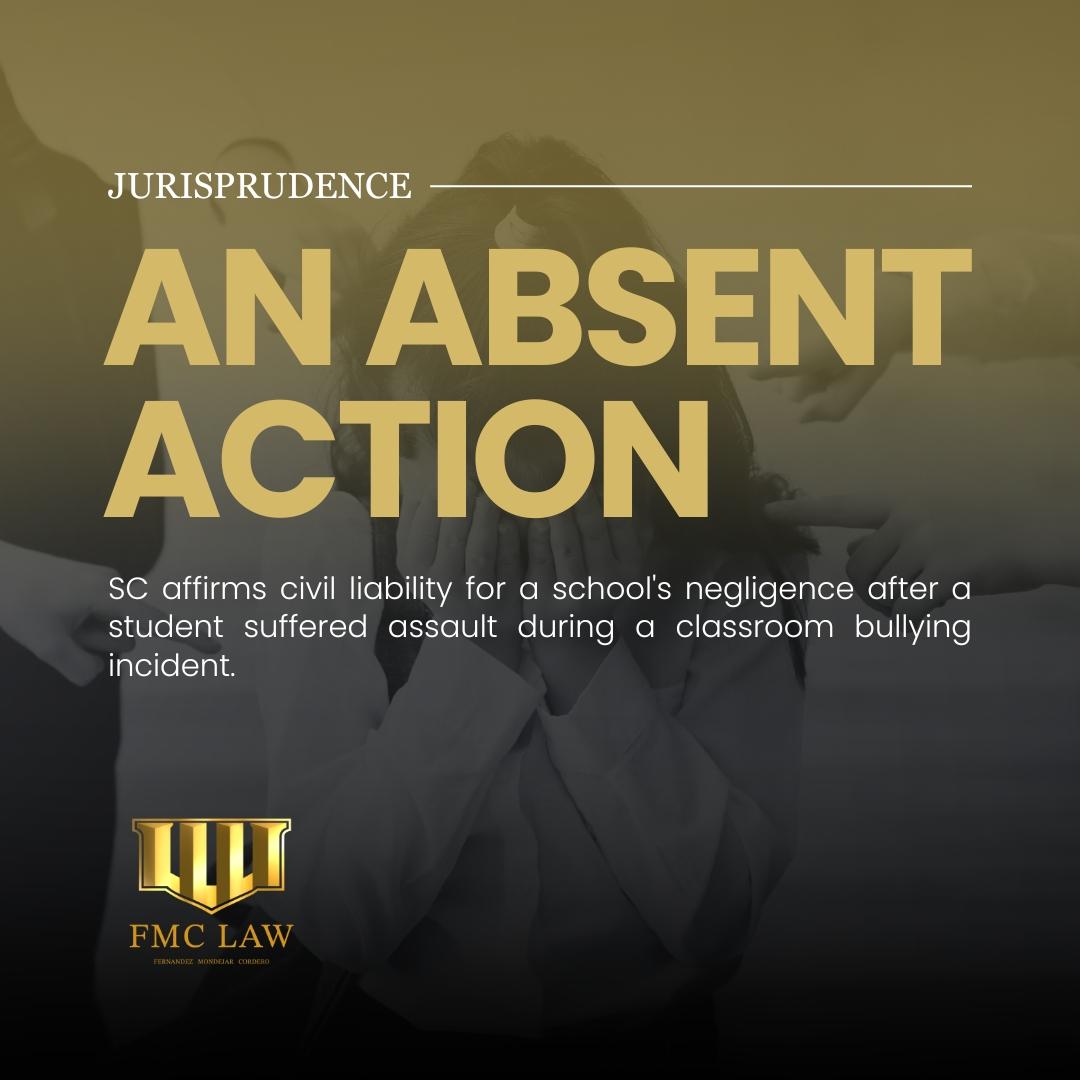
In a definitive ruling penned by Associate Justice Mario V. Lopez, the Supreme Court’s Second Division affirmed the high standards of responsibility schools must uphold to protect their students from harm.
The incident occurred during a computer class at Mother Goose Special School System, Inc. While the teacher was briefly out of the room, two students repeatedly punched a classmate. The victim reported the assault to other teachers immediately, but the staff took no meaningful action. The school administration failed to address the matter promptly.
The school's failure extended beyond the classroom. The administration only addressed the incident after the victim's parents learned about it from the mother of one of the aggressors. Despite the parents' formal requests for an investigation, the school dismissed the violent encounter as mere "teasing" or "rough play." They failed to impose any disciplinary action on the aggressors or institute proper protocols to prevent recurrence.
The Supreme Court affirmed the school's direct liability for negligence under the principle of culpa contractual. The High Court found the school negligent not merely for the teacher's momentary absence (the teacher was actually cleared of liability), but for the systemic failure to address the harm after it occurred.
Likewise, the Court identified three specific failures that established the school's negligence. First, the institution failed to act when it ignored the victim's immediate report of the attack. Second, the administration failed to inform the parents promptly about the injury their child sustained. Finally, the school failed to investigate the incident with the necessary rigor, conducting an inquiry that was inaccurate and dismissive, which ultimately downplayed the gravity of the physical assault.
The Supreme Court stated that "no student can absorb the intricacies of physics or higher mathematics or explore the realm of the arts and other sciences when bullets are flying or grenades exploding in the air." This highlights that safety is a prerequisite for learning. The Court ordered Mother Goose School to pay the victim's parents PHP 650,000.00 in moral and exemplary damages and attorney's fees. The decision stressed that the school had a non-delegable obligation to maintain a safe environment.
Trust Comes First
The trust parents place in a school carries a substantial legal price tag. When a school fails to promptly and effectively address incidents of physical harm, it breaches its contractual obligation to the student, opening itself up to significant liability for damages.
This decision serves as a serious reminder for school administrators. Due diligence requires more than just enrolling a child. It requires proactive protocols, proper teacher training, prompt parental notification, and a serious, documented response to every complaint of harm.
If you are a parent in Manila seeking clarity on school liability, or a family in Western Visayas needing protection for your child, understanding your options is essential. A Manila law office or a reputable Iloilo law firm can guide you through the process of holding institutions accountable. Finding the right law firm in Iloilo City or an attorney in NCR is the most effective way to protect your family's interests and ensure that the school's duty of care is upheld.
The safety of every student is non-negotiable.