Against the Rising Tide: High Court Orders Removal of Coastal Nuisances
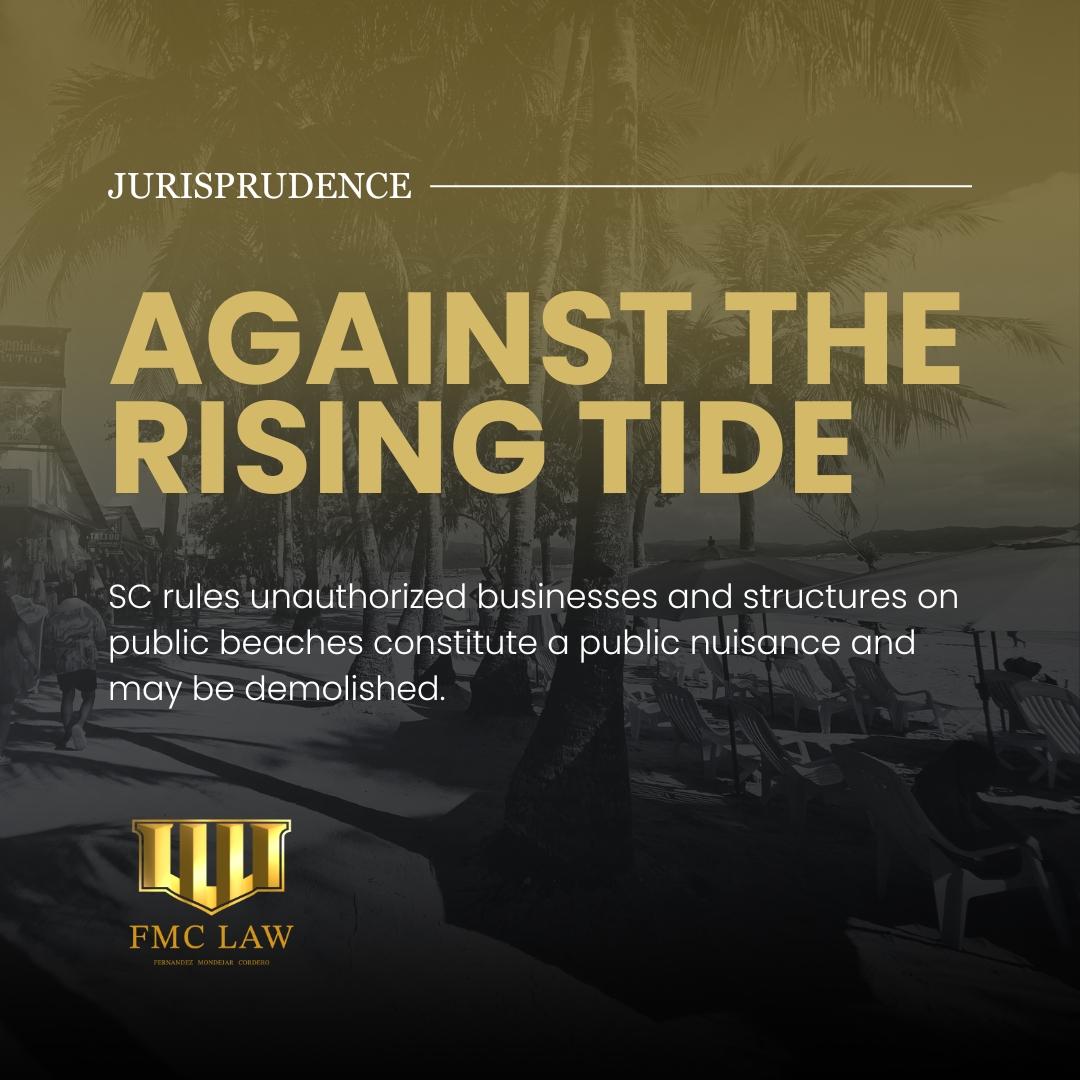
The salt air carries the scent of the sea while the rhythmic pulse of waves against the sand creates the signature soundtrack of the Philippine coast. Under the midday sun, the horizon stretches wide, offering a shared natural heritage where the land meets the water. For generations, these shorelines served as a sanctuary for both local families and travelers seeking a brief escape into nature’s open spaces.
However, many pristine coastal areas have undergone a jarring transformation. Makeshift eateries, cluttered sari-sari stores, and noisy videoke machines now frequently crowd the high-tide line, turning open sands into cramped corridors of unauthorized commerce. This encroachment creates a simmering friction between established eco-tourism businesses and informal operators. When shanties and makeshift billiard halls block the view and compromise the environment, the serene coastal experience vanishes, replaced by a hazardous and disorganized landscape that challenges the rights of the public and legitimate property owners alike.
A Clear Regulatory Tide
In the Philippines, the law provides specific mechanisms to address the misuse of public spaces and the disruption of property rights. Protecting the coastline requires a firm understanding of civil law and environmental regulations.
Defining Nuisance
Under Article 694 of the Civil Code, a nuisance refers to any act, omission, establishment, business, or condition that meets specific statutory criteria. These include:
Injuries to or endangerment of the health or safety of others.
Acts that annoy or offend the senses.
Conditions that shock, defy, or disregard decency or morality.
Obstructions to or interference with the free passage of any public highway, street, or body of water.
Hindrances to the use of property.
The law further distinguishes between a private nuisance and a public one. According to Article 695, a nuisance is public when it affects a community or a considerable number of persons, or when it interferes with a public right by directly encroaching on public property.
Rules on Foreshore Lands and Public Domain
The management of our coastlines is governed by strict land classification rules. Foreshore land, which is the part of the shore alternately covered and left dry by the ordinary flow of the tides, belongs to the public domain. The following laws regulate its use:
Commonwealth Act No. 141 (Public Land Act)
This foundational law dictates that lands of the public domain are generally inalienable and cannot be owned by private individuals through mere occupation.
DENR Administrative Order (DAO) No. 2004-24
This order specifies that any private use of foreshore land requires a Foreshore Lease Agreement (FLA) from the Department of Environment and Natural Resources. Without this lease, any structure built on the sand is unauthorized and illegal.
Breaking the Wave
The clarification on beachfront obstructions arrived in a Decision written by Associate Justice Amy C. Lazaro-Javier, which addressed a long-standing dispute at Matabungkay Beach in Batangas. The conflict involved the owners of Villa Alexandra Beach Resort and the Calimlim family, who had operated informal structures, including videoke joints and pool tables, along the beach for over fifty years. The resort owners argued that these makeshift businesses were built without permits, disrupted their operations, and inconvenienced their guests.
The Calimlims defended their position by citing their five decades of occupancy, claiming they had no intention of disturbing the peace. However, the litigation revealed significant hazards. Evidence showed that unsanitary water seeped from the informal structures’ toilets toward the resort, and their open-fire kitchens created a constant fire risk. In fact, a fire had previously broken out due to these unregulated cooking areas. Furthermore, the lack of building permits meant the structural integrity of these businesses was never verified, putting every beachgoer at risk.
The High Court ruled that long-term occupancy does not grant a legal right to stay on public land without a valid DENR lease. Since the DENR had already denied the Calimlims’ lease application and issued notices to vacate, their continued presence was a direct encroachment on public property. The Court determined that these unauthorized structures constituted a public nuisance by their very nature. The ruling affirmed the Court of Appeals' order for the immediate demolition of the illegal structures and required the operators to pay damages to the resort owners for the financial losses and safety risks caused by their unauthorized stay.
The Safe Harbors
Public safety and legal compliance override historical occupancy. The Supreme Court has established that the unauthorized use of public foreshore land is not a right, regardless of how many years have passed. For legitimate business owners, this serves as a vital precedent to protect their investments from the negative impacts of unregulated encroachment.
Property owners and local governments must exercise due diligence to ensure that all coastal structures hold valid DENR permits. Understanding the legal mechanisms available to abate nuisances is essential to maintaining both the beauty and the safety of our shores. Navigating land classification laws requires an expert evaluation of civil and environmental statutes.
If you are dealing with property disputes in Western Visayas or need a legal consultation in Metro Manila, professional law services can clarify your options. Reach out to a litigation attorney in Iloilo City or a seasoned Manila law office to ensure your property remains compliant. Keep your property interests above water and fully aligned with the law.